
The Room-by-Room Organisation System That Actually Sticks
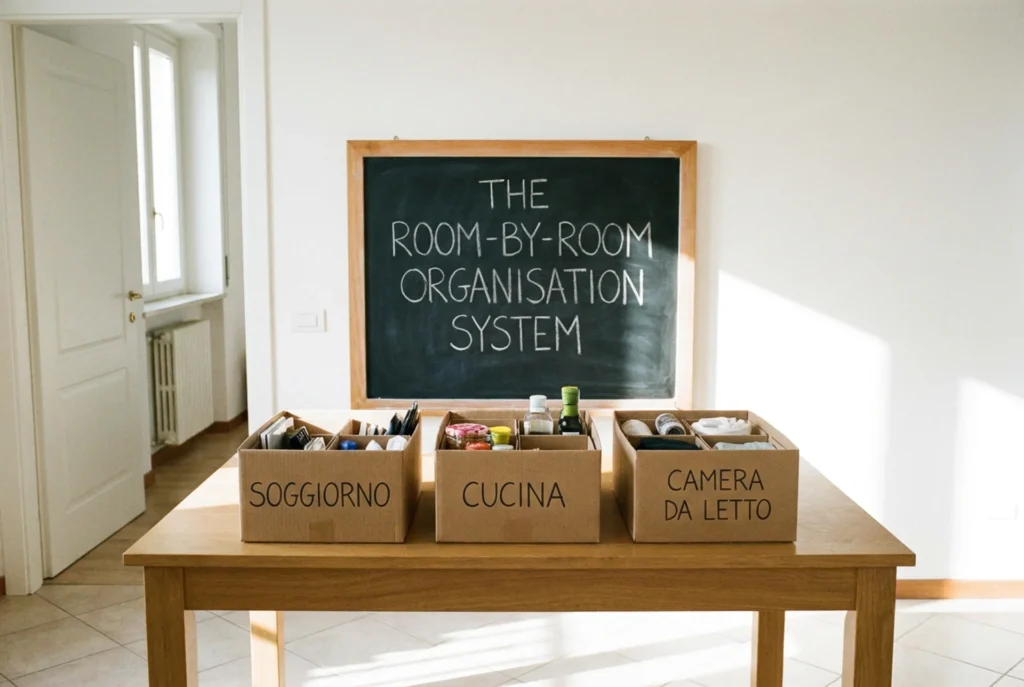
Every home gets organised occasionally. Few stay that way. The difference between a tidy home and a perpetually cluttered one is almost never motivation — it’s system design. Here’s a room-by-room approach that works because it’s built around how people actually live, not how they aspire to.
The Principle Before the System
Most home organisation advice focuses on storage solutions: bins, boxes, labels, dividers. These help, but they address symptoms rather than causes. A home with too much stuff and poor habits will fill any storage you provide within weeks. The sustainable approach addresses three things in sequence: reduce first, then organise, then maintain.
Reduce: remove anything that doesn’t belong in the room, is broken, or hasn’t been used in 12 months. Be ruthless — storage for things you don’t need is wasted space.
Organise: assign every remaining item a fixed location. “A place for everything, everything in its place” is a cliché because it works.
Maintain: build habits (not one-off sessions) that keep things in their places. Five minutes per day beats two hours every month.
The Entrance Hall — First and Last Impression
The entrance is where chaos begins and where order must be enforced first. Everything that enters the home passes through here; everything that clogs it eventually spreads to the rest of the house.
- One hook per person for coats, bags, and keys. More hooks create more clutter. Make the default the right behaviour: hook in reach = coat on hook.
- A tray or mat for shoes, positioned so that taking off shoes and placing them in the designated spot requires no extra thought.
- An outbox — a small basket or shelf for things that need to leave the house: library books, returns, items for friends. If it’s leaving, it lives here until it goes.
- No surface clutter rule: any flat surface in the entrance becomes a dumping ground. Keep surfaces clear by removing them entirely (no console tables if you can’t maintain them), or using a single decorative object that signals “this surface is taken.”
The two-minute rule: if putting something away takes less than two minutes, do it immediately. This single habit, applied consistently, prevents 80% of household clutter from accumulating in the first place.
The Kitchen — Highest-Traffic, Hardest to Maintain
Kitchens are the hardest room to keep organised because they are used repeatedly throughout the day by multiple people, often under time pressure. The solution is to make the right behaviour easier than the wrong one.
- Zone your kitchen by activity: prep zone (boards, knives, bowls), cooking zone (pots, pans, oils, spices), serving zone (plates, glasses, cutlery). Everything lives in or near the zone where it’s used, not where it fits alphabetically or aesthetically.
- Clear the counter completely. Counter appliances should earn their place daily — if the toaster is used once a week, it doesn’t belong on the counter. Only things used daily stay out.
- Label the fridge shelves. Designate specific shelves for specific categories (dairy, leftovers, drinks). It takes five minutes and prevents the “push everything to the back until it goes bad” problem.
- One-in-one-out rule for utensils, cookware, and storage containers. Before buying a new frying pan, the old one leaves. Drawers of duplicate tools and towers of mismatched Tupperware are the enemy of kitchen organisation.
The Bedroom — Sanctuary, Not Storage
The bedroom accumulates clutter because it’s private — the bar for tidying is lower when only you see it. But disorder in the bedroom affects sleep quality and morning stress, making it worth maintaining even when no one is visiting.
- Make the bed every morning. It takes 90 seconds and resets the room. A made bed makes the entire room look more ordered than it may be — and signals to your brain that the day has officially started.
- A chair is not a wardrobe. The “floordrobe” and “chairdrobe” are symptoms of insufficient storage or unclear systems. Add a dedicated hook or tray for clothes that have been worn once but aren’t dirty — this captures the purgatory items before they colonise every surface.
- Audit your wardrobe annually. Clothes you haven’t worn in a year are either genuinely not useful or emotionally held onto. Donate, sell, or discard them — hanging onto them causes decision fatigue every time you open the wardrobe.
The Bathroom — Functional Minimalism
Bathrooms work best when surface clutter is minimised and everything has a designated place. Most bathroom clutter is products: expired medicines, nearly-empty bottles, duplicates purchased before the first was finished.
- Monthly audit of products: discard anything expired, empty, or unused in the past month. Bathroom shelves fill surprisingly fast with things that were bought with good intentions.
- Drawer organisers for makeup, toiletries, and medicines. Without them, drawers become chaotic within days. Rigid dividers keep categories separate and make items findable in seconds.
- Towel hooks, not rings. Towel rings look elegant but encourage draping rather than hanging properly. Hooks take one motion; rings require two — and one-motion defaults win every time.
The Maintenance System — Five Minutes a Day
Organisation sessions work. Maintenance habits make them last. The simplest sustainable system:
- Morning (2 min): make the bed, put away anything left out from the night before.
- After cooking (3 min): wipe the counter, return everything to its zone, deal with dishes.
- Evening (5 min): a sweep of the main living areas, returning things to their designated places before you sit down for the evening.
- Weekly (20 min): one room, deeper tidy — wipe surfaces, reorganise anything that has drifted, deal with the paper pile.
Organisation is not a project you complete — it is a system you maintain. The goal is not a perfect home; it is a home where the default state is ordered, and disorder requires deliberate effort to create. Design the system correctly and tidiness becomes the path of least resistance.
- info@zoralshop.com